Why lift while you're on a GLP-1?
Short answer: when you lose weight, part of what you lose is lean mass, which includes muscle. Strength training plus enough protein is the best-studied way to keep more of it. The medicine changes your appetite. It does not train your muscles.
In studies of GLP-1 medicines, about a quarter of the weight people lost was lean mass, as a 2025 review in Obesity Pillars summarizes. In the STEP 1 trial of semaglutide, the amount of lean mass went down, but the share of the body made of lean mass went up, because fat fell faster (Wilding and colleagues, 2021).
Strength training changes what you lose. A review of six trials in older adults with obesity found that lifting three times a week while cutting calories prevented about 93% of the lean mass loss that dieting alone caused (Sardeli and colleagues, 2018). A 2025 review of 25 trials in adults with overweight or obesity found that people who added strength training while losing weight kept more lean mass and lost more fat, even though their total weight loss was about the same (Binmahfoz and colleagues, 2025).
Those training studies were not done in people taking GLP-1 medicines, so treat them as the best evidence available, not a promise. For the full picture, read our guide on how to keep muscle on a GLP-1.
How much exercise do you need?
The US Physical Activity Guidelines for Americans ask adults for at least 150 to 300 minutes a week of moderate activity, like brisk walking, plus muscle-strengthening work that involves all the major muscle groups on 2 or more days a week.
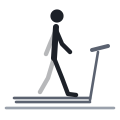
This plan covers the strength part. Many of its days also end with 12 to 15 minutes of easy cardio, which counts toward the weekly minutes. Walks on your rest days fill in the rest.
How this plan is built
The builder is the same one the FinallyMe app uses, so the same answers give the same week in both places.
- The split follows your days. Two or three days are full-body days. Four days are upper body and lower body, twice. Five days are push, pull, and legs, then an upper and a lower day. Six days are push, pull, and legs, twice.
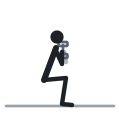
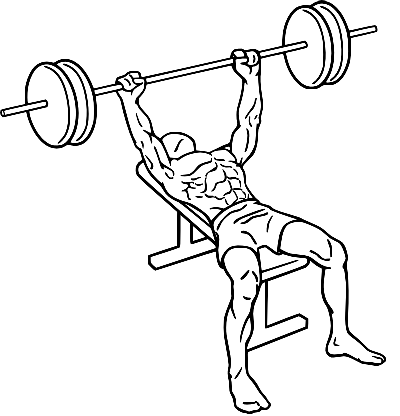
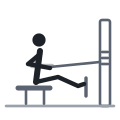
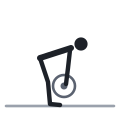
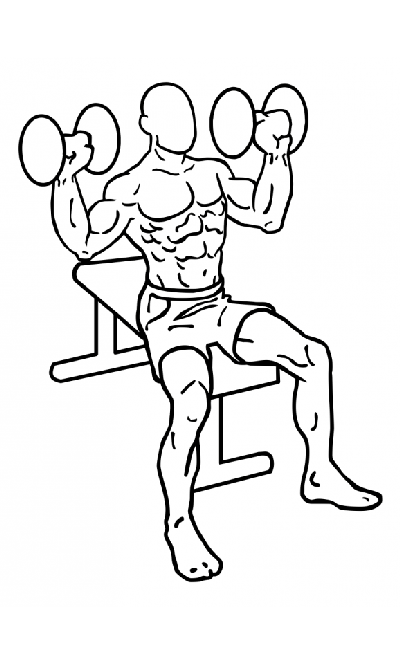
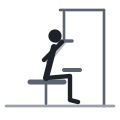
- Every week covers ten basic moves: a push away from your chest, a push overhead, a pull toward your chest, a pull from overhead, a squat, a hip hinge, a one-leg move, a core hold, a loaded carry, and cardio.
- Sets and reps. Most lifts are 3 sets of 8 to 12 reps, the range the American College of Sports Medicine recommends for people new to lifting (ACSM position stand, 2009). Core holds and carries are timed, 30 to 45 seconds a set.
- Rest. About 2 to 3 minutes between sets of the big lifts and 1 to 2 minutes for smaller ones, in line with the same ACSM guidance.
- Your focus. A muscle you pick for more work gets a fourth set on the moves that train it, and that work moves to the start of the day while you are fresh. A muscle you pick for less drops to two sets. Calf raises join every leg day only if you ask for calves.
- Time. The minutes on each day count every set, the rest between sets, and a minute to move between exercises, rounded up to the next 5 minutes.
How to progress
The plan uses double progression: stay at one weight until you reach the top of the rep range, then add weight and start again at the bottom. ACSM's position stand recommends a 2 to 10 percent increase in load when you can do one or two reps more than your target on two sessions in a row, with the smaller step for small muscles and the bigger step for large ones.
To judge effort, count the reps you have left in the tank at the end of a set. Researchers tested this reps-in-reserve scale and found it a practical way to steer daily training (Zourdos and colleagues, 2016). This plan aims for 2 or 3 good reps left on most sets.
Your first two weeks
- Go lighter than you think. The first sessions are for learning each move. A weight that feels easy is fine.
- Keep the plan, cut the sets. If a full session is too much, do 2 sets of each move instead of 3 and build up.
- Write it down. Note the weight and reps for each set so next week you know what to beat.
Training on low-appetite days and shot days
A GLP-1 can make you much less hungry, and some days you may have eaten very little before a workout. On those days a lighter session is still a good session: fewer sets, or just the walk. Drink water before and during your workout.
If you feel dizzy, faint, or shaky while training, stop and sit down, eat or drink something if you can, and tell your healthcare provider, especially if it keeps happening. Track how much you drink with the water intake calculator.
Home or gym: the swaps
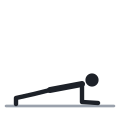
Switch between Gym and Home and every exercise changes to a version that fits. At home the plan uses push-ups, pike push-ups, rows under a sturdy table or bar, squats, glute bridges, lunges, step-ups, planks, a suitcase carry with a heavy bag, and a brisk walk, stairs, or a jump rope for cardio. Tap Swap on any exercise to trade it for another version of the same move. Tap an exercise name to open it in the exercise library, with the muscles it works and its form cue.
Protein makes the plan work
Training gives your muscles a reason to stay; protein gives them the building blocks. The 2025 Obesity Pillars review describes protein intakes above 1.2 grams per kilogram of body weight a day, spread evenly across meals, together with aerobic activity and structured strength training, as the practical way to protect lean mass on a GLP-1. Find your own number with the GLP-1 protein calculator, see how much of you is lean mass with the lean body mass calculator, and ask your provider or a dietitian what suits you. Need ideas? Browse the high-protein recipes or the 7-day meal plan.
Questions people ask
What workouts should I do on a GLP-1?
Strength training for every major muscle group on 2 or more days a week, plus moderate activity like brisk walking most days, is what the US Physical Activity Guidelines ask of adults. The plan above builds the strength part for you and adds short cardio blocks. Check with your healthcare provider before starting if you have heart, joint, or blood pressure concerns.
How often should I lift weights on a GLP-1?
At least 2 days a week, the minimum in the US guidelines. People new to lifting usually start with 2 or 3 full-body days, which is also what the ACSM position stand suggests for beginners. Studies of training frequency suggest that working each muscle group on two days a week builds more muscle than one day.
Can you build muscle while on Zepbound, Wegovy, or Ozempic?
Nobody can promise it. What studies show is that strength training while losing weight helps people keep more lean mass and lose more fat, and the training and protein, not the medicine, do that work. Beginners often get stronger quickly. How much muscle you keep or gain depends on your training, your protein, your sleep, and your body.
Does a GLP-1 make workouts more effective?
There is no good evidence that it does. A GLP-1 medicine changes appetite. The muscle you keep comes from lifting and eating enough protein.
Is it possible to prevent muscle loss completely?
Studies show strength training can cut it a lot. One review of older adults dieting found lifting prevented about 93% of the lean mass loss, but that is an average from studies, not a guarantee, and it was not done in people taking GLP-1 medicines.
Can I get this workout plan as a PDF?
Yes. Tap Print or save as PDF, then choose Save as PDF in your browser's print window. The printout fits your week on one page with the sets, reps, and rest for every exercise. You can also copy a link that opens this same plan, or save it as a text file.
Is a gym better than training at home?
Both work. The gym makes it easier to add weight in small steps, which matters once bodyweight moves get easy. Home training is easier to fit into a busy day. Pick the one you will keep doing.
Where the numbers come from
More in our full list of sources.
More free tools
The fine print that matters: this page is general information, not medical advice, diagnosis, or treatment. Check with your healthcare provider before starting a new exercise program, especially if you have a health condition, are new to training, or take medicines that affect your heart rate or blood sugar.